


water walk, noun. A path situated beside or affording views of water.
    — Oxford English Dictionary
London was spread out before me, a vast campagne.
    — W. N. P. Barbellion
… the huge peaceful wilderness of outer London …
    — George Orwell
The following are not detailed route descriptions, but suggested start and end points to walk between, preferably with the Ordnance Survey app. The OS screenshots show the start of each water walk and, if possible, the nearest railway or tube station. The direction of travel is always Thamesward.
River Ash
Middlesex.
~7 miles
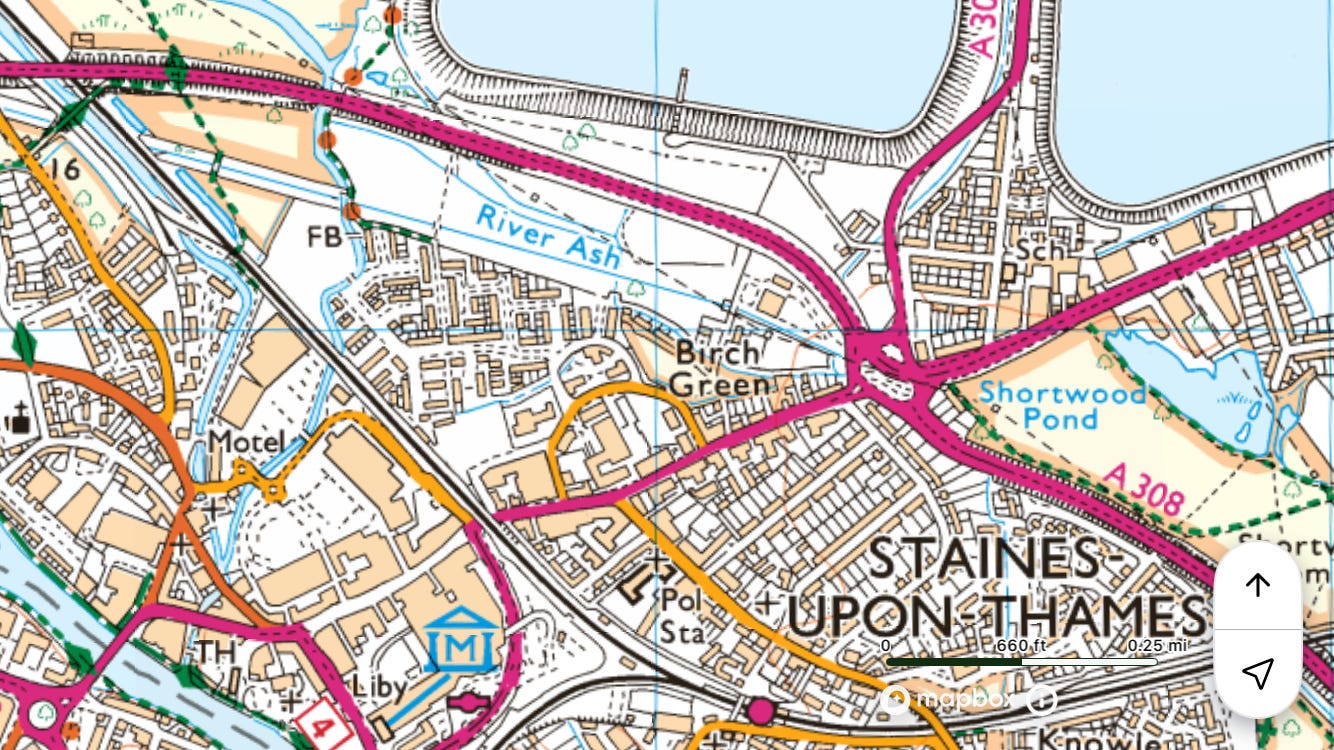
Train to ◉Staines
Walk north to the Colne, of which the Ash is a distributary
Walk south-east to the Thames / ◉Shepperton
Field notes: Not the most rewarding, because for much of the time it isn’t possible to be by the river. The walk around the back of Shepperton Studios is nice. N.B. Both Google Maps and Wikipedia refer, ludicrously, to ‘River Ash, Surrey’. Don’t be fooled – the River Ash is clearly north of the Thames in Middlesex.


Basingstoke Canal
Western half
Hampshire and Surrey.
~20 miles
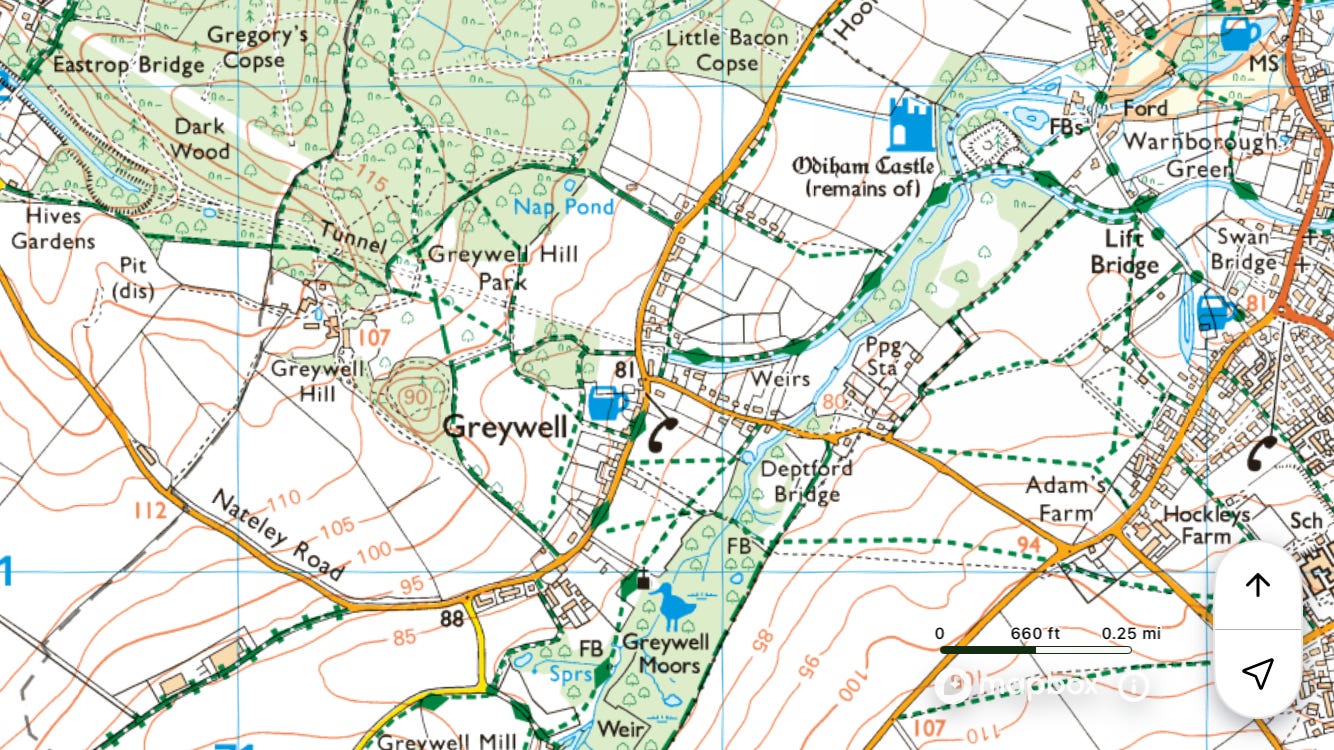
Train to ◉Hook
Walk south to join the canal at Greywell
Walk east on the towpath to ◉Ash Vale
Field notes: It took longer than expected to get from Hook station to the towpath at the eastern end of Greywell tunnel. Locked gates around Carleton’s Gorse and cattle in Gaine’s Wood. Long walk – it was dark by the time I got to Ash Vale. Saw a kingfisher near Aldershot.


Eastern half
Surrey.
~15 miles
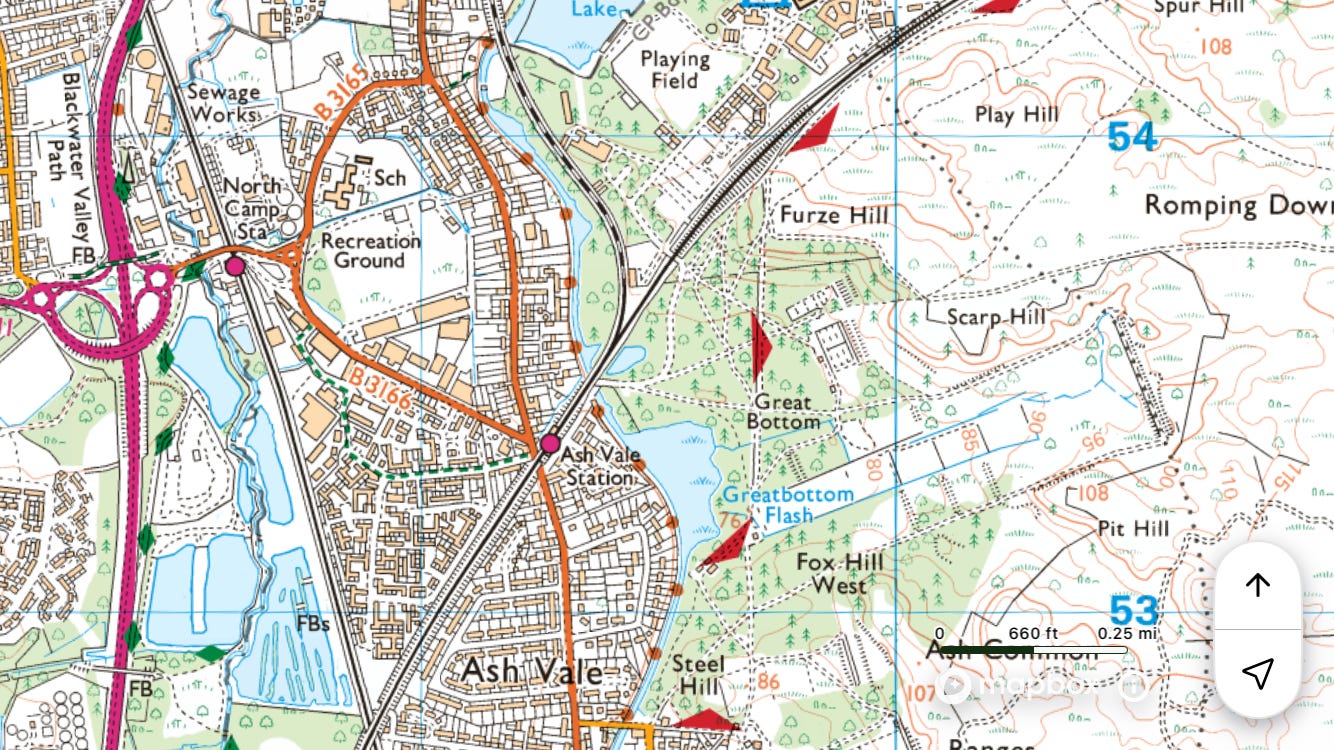
Field notes: Narrowly avoided going off in the wrong direction when the train split at Woking. Passed an angler who had just caught an enormous mirror carp and was posing with it for photos. The canal is pretty much drained around Pirbright Camp and Deepcut Barracks.


Beverley Brook
~8 miles
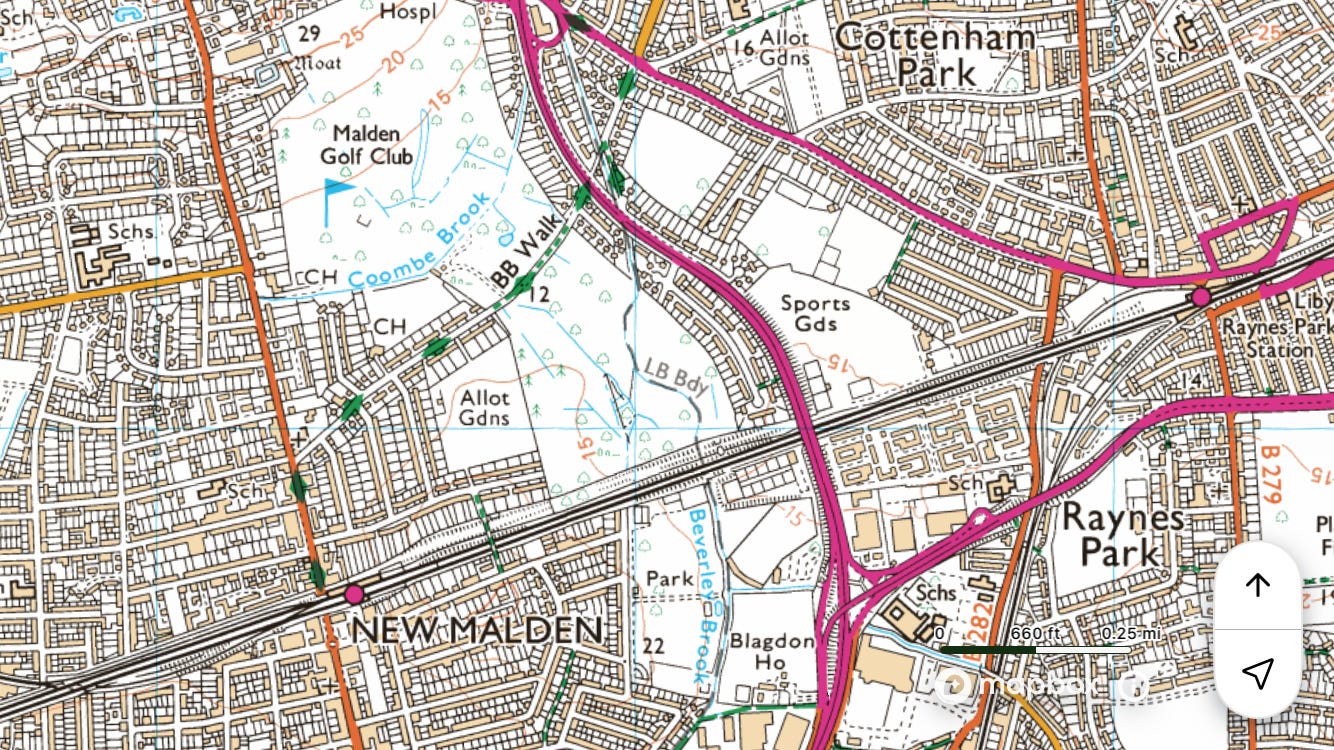
Train to ◉New Malden
Walk north on the Beverley Brook Walk to the Thames / ◉Putney or ◉Barnes
Field notes: At Palewell Common there’s a fence between Beverley Brook Walk and Beverley Brook, putting the latter literally beyond the pale, ‘An area enclosed by a fence’ (OED).


Bonesgate Stream
Partly in Surrey.
~6 miles
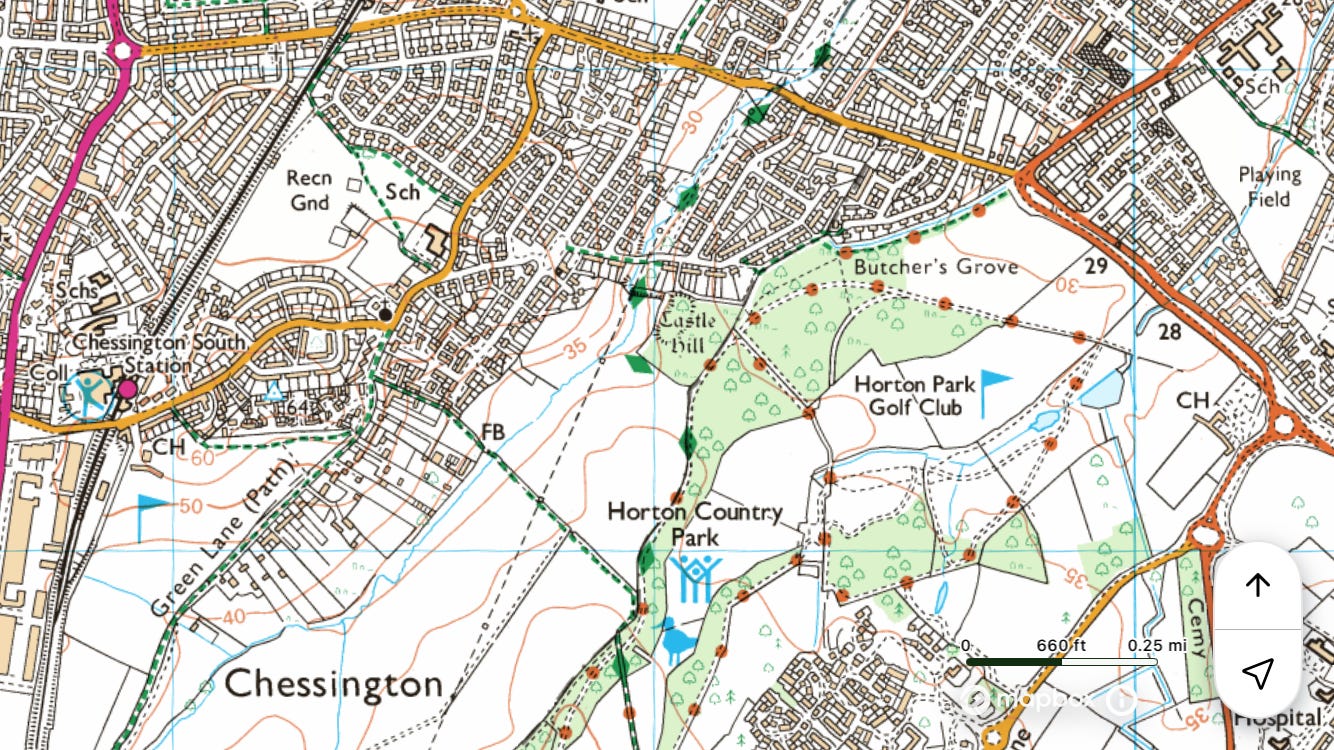
Train to ◉Chessington South
Walk south to explore the two arms of the stream, partly on the Chessington Countryside Walk.
Walk north along the stream to the Hogsmill / ◉Tolworth
Field notes: It’s not a long walk, so it is worth mooching around the upper reaches of the stream in Chessington Wood, Rushett Farm, Epsom Common, and Horton Country Park. Wikipedia says that ‘Great Pond and Stew Pond [on Epsom Common], are thought to have been dug in the early medieval period for Chertsey Abbey. They were probably stocked with carp and other fish, to provide food for the monks and their guests. The ponds were formed by damming a headwater of the Bonesgate Stream.’


River Brent
Northern half
~8 miles
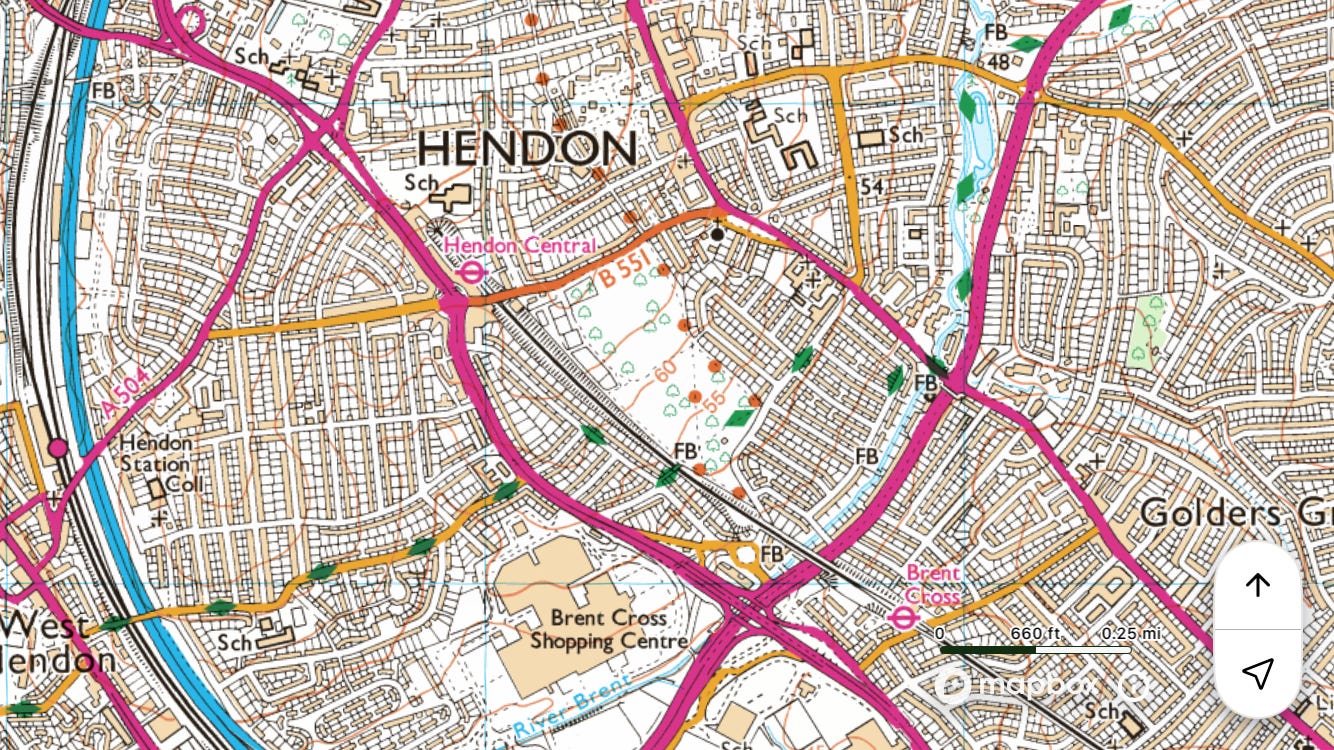
Tube to ◉Hendon Central
Walk south to ◉Hanger Lane
Field notes: The sunny photos make it look nice, but would not recommend. Litter-plus and weed smoke all the way. Loads of Japanese knotweed in Brent River Park, Tokyngton. The London Encyclopædia: ‘In 1890 it was said that above the Welsh Harp sewage flowed down the Brent and that between Hanwell and Ealing even the water rats had fallen victims to the foulness of the Stream.’1


Southern half (incorporating part of the Grand Union Canal)
~7 miles
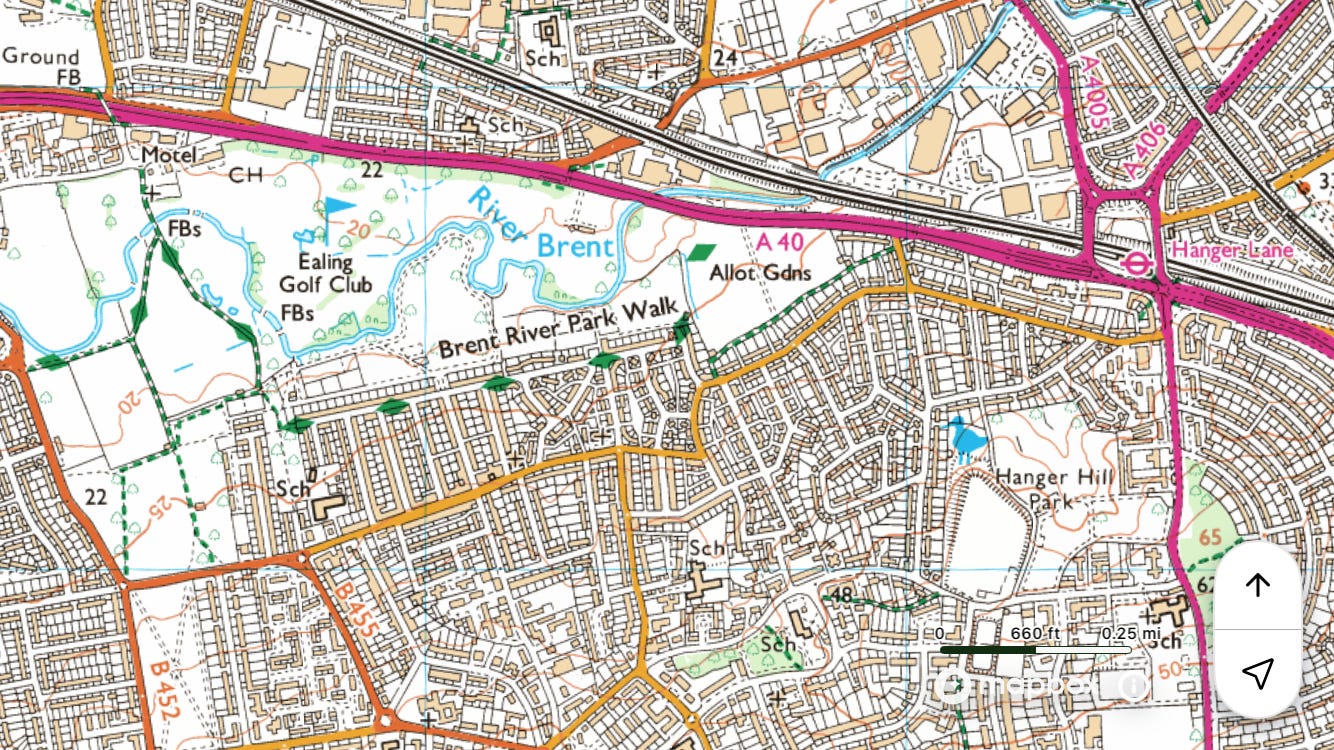
Tube to ◉Hanger Lane
Walk south on the Brent River Park Walk to the Thames / ◉Brentford
Field notes: It’s not as rewarding as some other walks – an unmaintained path to the point of non-existence. I blundered around in a jungle just south of the A40, retreated, went along the road for a bit, and through Brent Valley Golf Club. It doesn’t become a proper riverside walk until Greenford, and then it’s not that far to Hanwell and the confluence with the Grand Union Canal.


Chertsey Bourne
Incorporating part of Addlestone Bourne
Surrey.
~9 miles
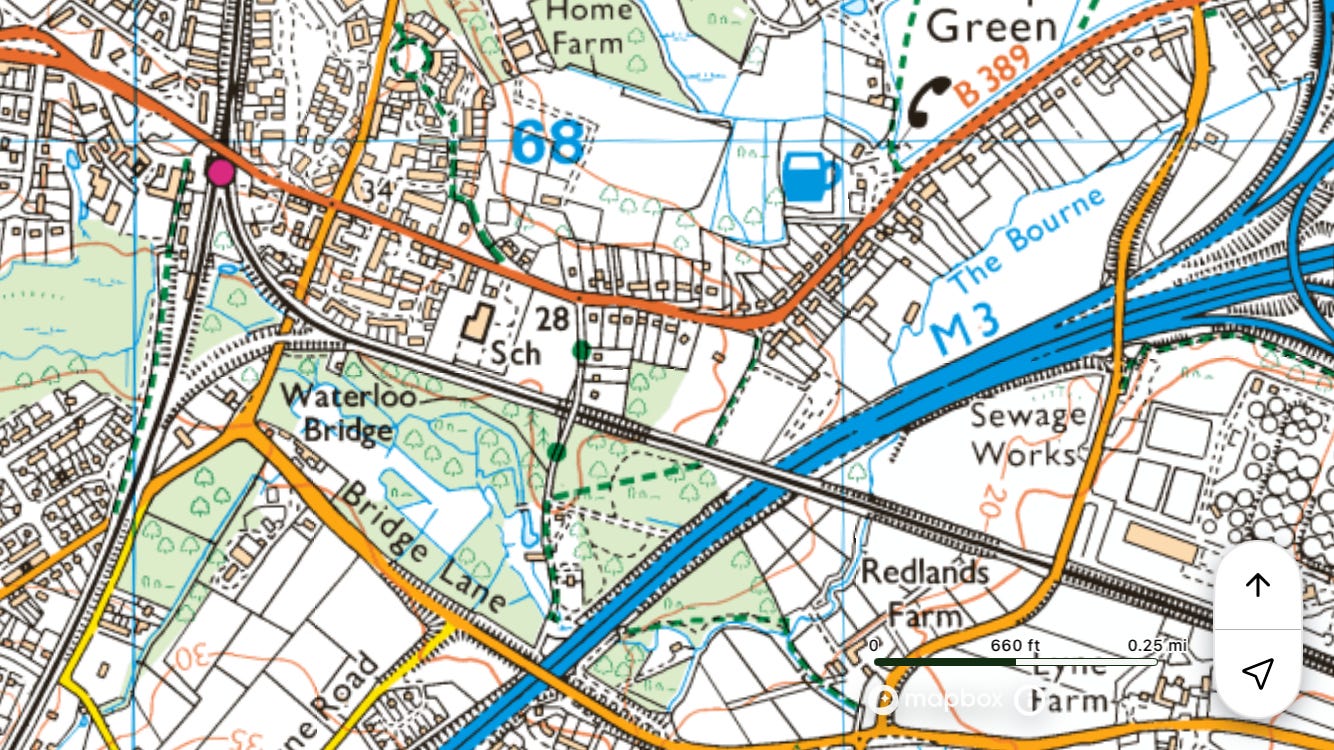
Train to ◉Virginia Water
Walk south-east to the Thames / ◉Shepperton
Field notes: There are three places that are worth exploring but where you have to double back, even though the latter two are meant to be rights of way: Cabrera Trust riverside walk (west of Virginia Water station), Bourne Copse (accessed by going under the M3), and a field (next to junction 2 of same). Monks Walk is fun, through the middle of the Thorpe Park lakes – the monkish water-walker is free to add his own squeals of delight to the chorus issuing from the other side of the fence. Chertsey Bourne is also known simply as the Bourne, with another branch flowing through Addlestone. It’s possible to see a bit of this near the confluence of the two in Woburn Park. It makes sense for the end of the walk to be on the Wey Navigation towpath, though the Bourne actually flows into the Thames. There isn’t a particularly convenient station to use at the end – I got the ferry to Shepperton.


River Chess
Buckinghamshire and Hertfordshire.
~10 miles
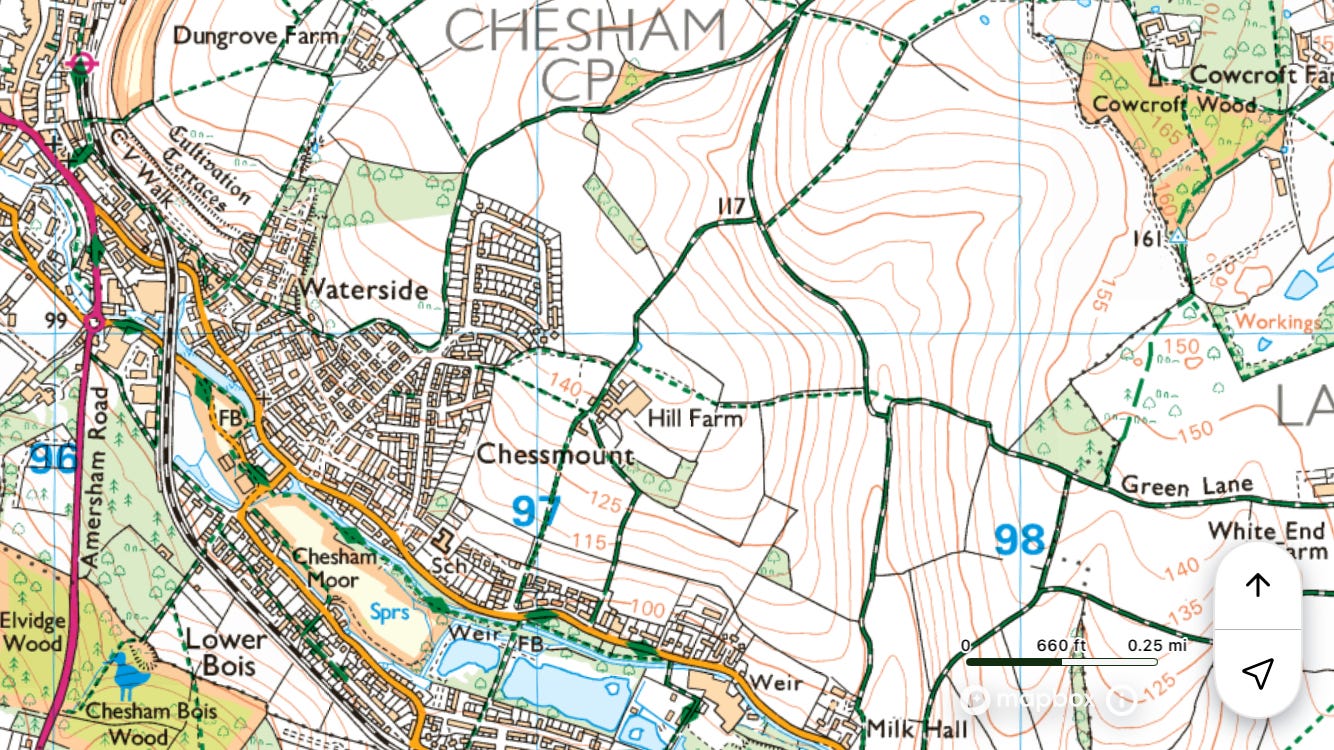
Tube to ◉Chesham
Walk south-east on the Chess Valley Walk to the Colne / ◉Rickmansworth
Field notes: The Greater London ‘National Park City’ map on my kitchen wall gives a sense of one of London’s asymmetries. In the bottom left-hand corner is Guildford, twenty miles from the nearest District line stations, while in the top left-hand corner is Chesham, with a station on its own branch of the Metropolitan line! The bucolic Chess Valley cuts through the Chilterns. Then, towards the end of the walk, there’s a footbridge over the M25, always a thrilling experience.


River Ching
Partly in Essex.
~10 miles
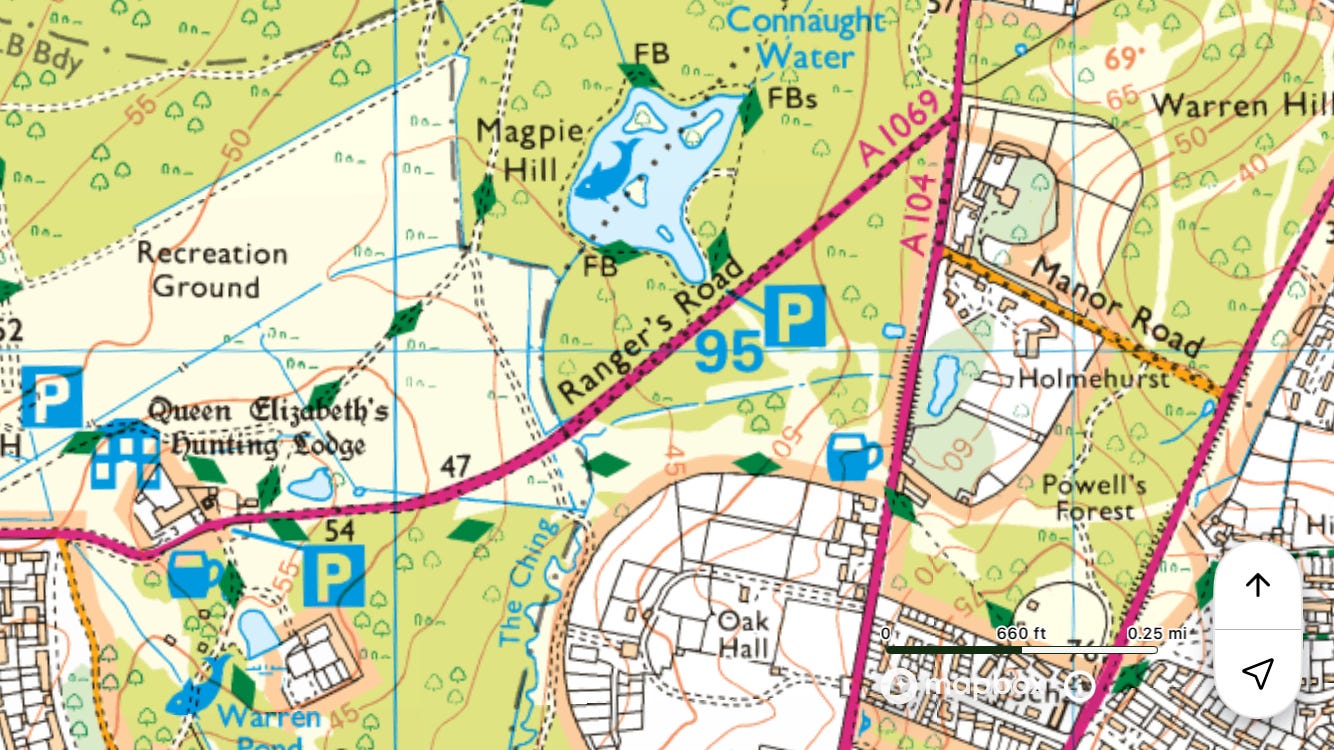
Tube to ◉Epping
Walk south through Epping Forest to the source of the Ching at Connaught Water
Walk south to the Lee / ◉Highams Park
Field notes: This is a good opportunity to go to the end of the Central line, to Epping, and then walk back towards London through the whole of Epping Forest, picking up the Ching at its source near Connaught Water.


River Colne
Northern section
See Grand Union Canal.
Southern section (incorporating part of Colne Brook)
Technically not Greater London – the Colne is the Middlesex–Buckinghamshire border.
~13 miles
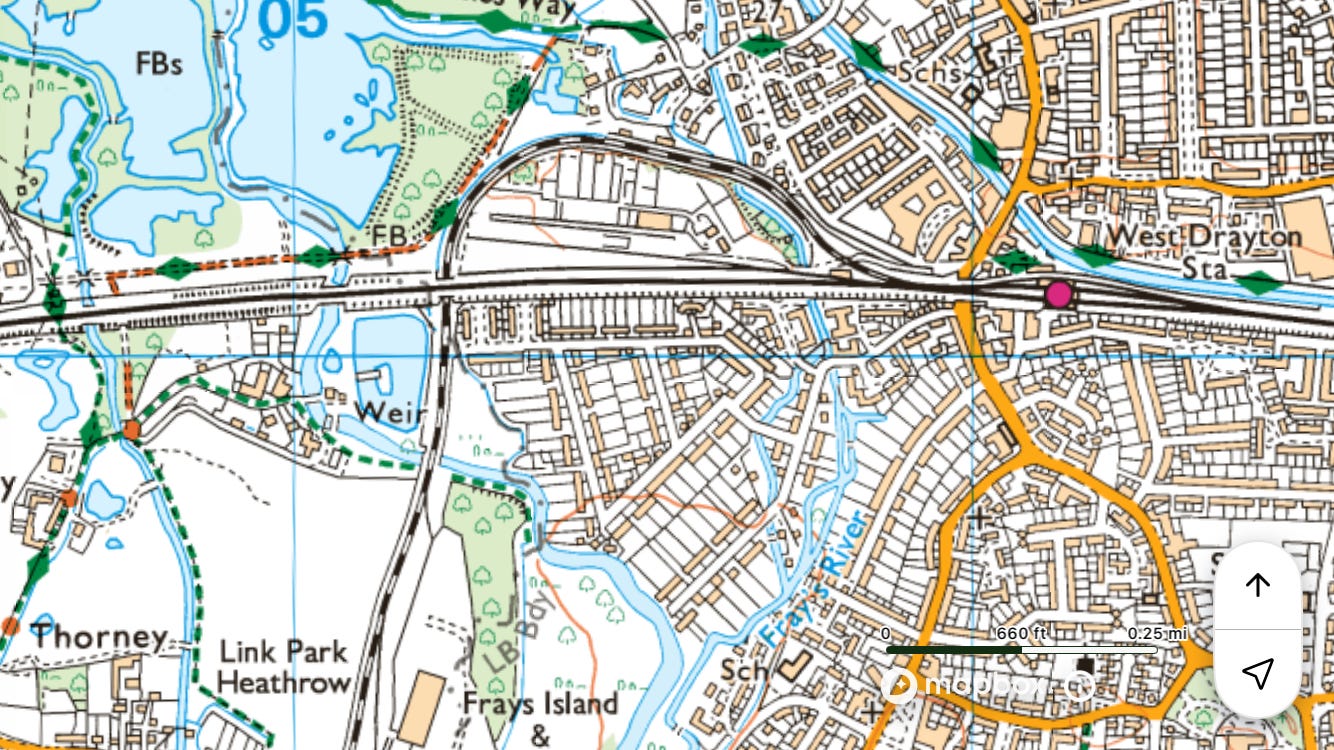
Elizabeth line to ◉West Drayton
Walk south on the Colne Valley Trail/Way to the Thames / ◉Staines
Field notes: Fantastic walk in the valley of what Michael Drayton in 1612 called the ‘Crystall Colne’, though today much of the waymarked route is not right by the river – sometimes you’re by Colne Brook, a distributary, instead. The one bit when I felt like I was somewhere I wasn’t meant to be was coming into Horton, where the path goes through the yard of a skip hire business and past Berkyn Manor Farm, where Milton once lived (in an earlier house). In London Orbital, his wonderful book about M25 country, Iain Sinclair calls Staines Moor ‘the most inspiring section we have so far encountered on our M25 orbit.’2 In orbital terms I walked between junctions 15 and 13. On the train back to Richmond I went into the empty first-class carriage and it was worse than the rest of the train – the same, but with a shitty nylon curtain that flapped annoyingly at me.


Colne Brook
Buckinghamshire and Middlesex.
~13 miles
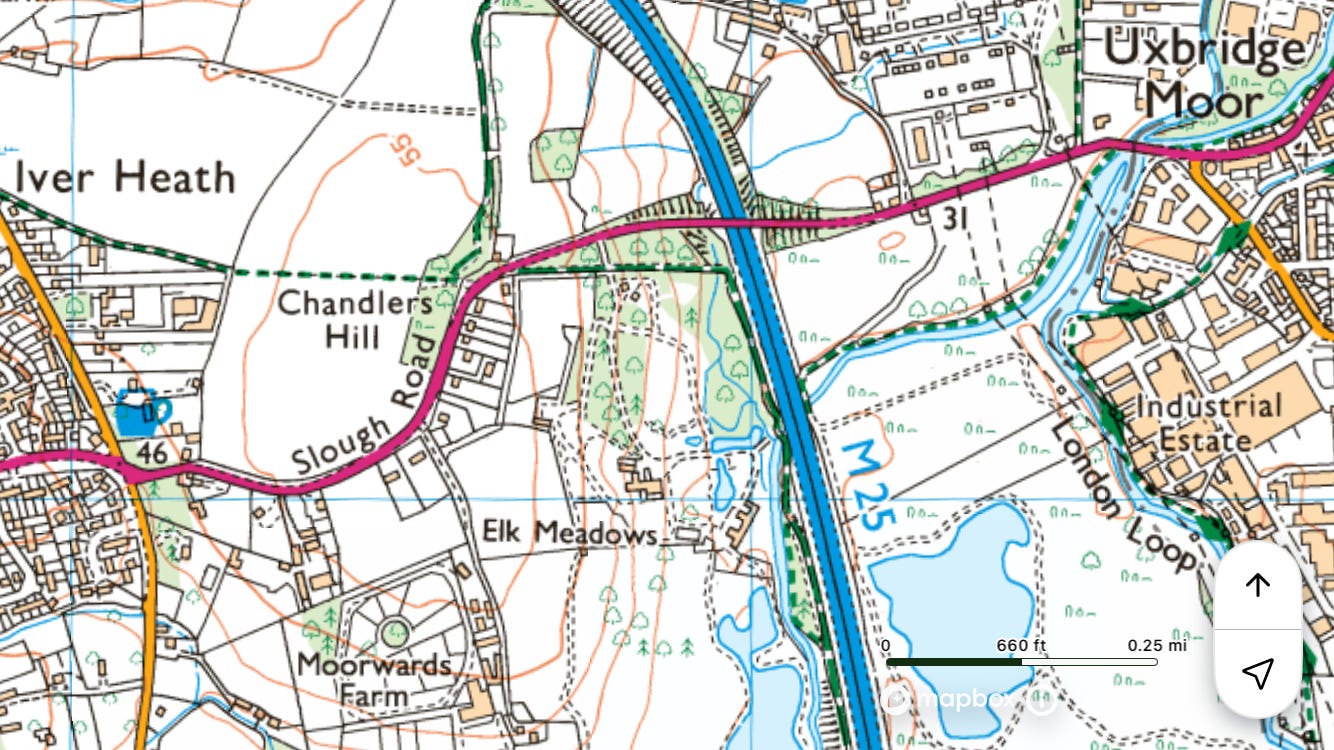
Tube to ◉Uxbridge
Walk west to join the river where is splits from the Colne at Uxbridge Moor
Walk south, partly on the Colne Valley Trail/Way and Colnbrook Walk, to the Thames / ◉Staines
Field notes: ‘Where would you like to be when the world ends?’


River Crane
~10 miles
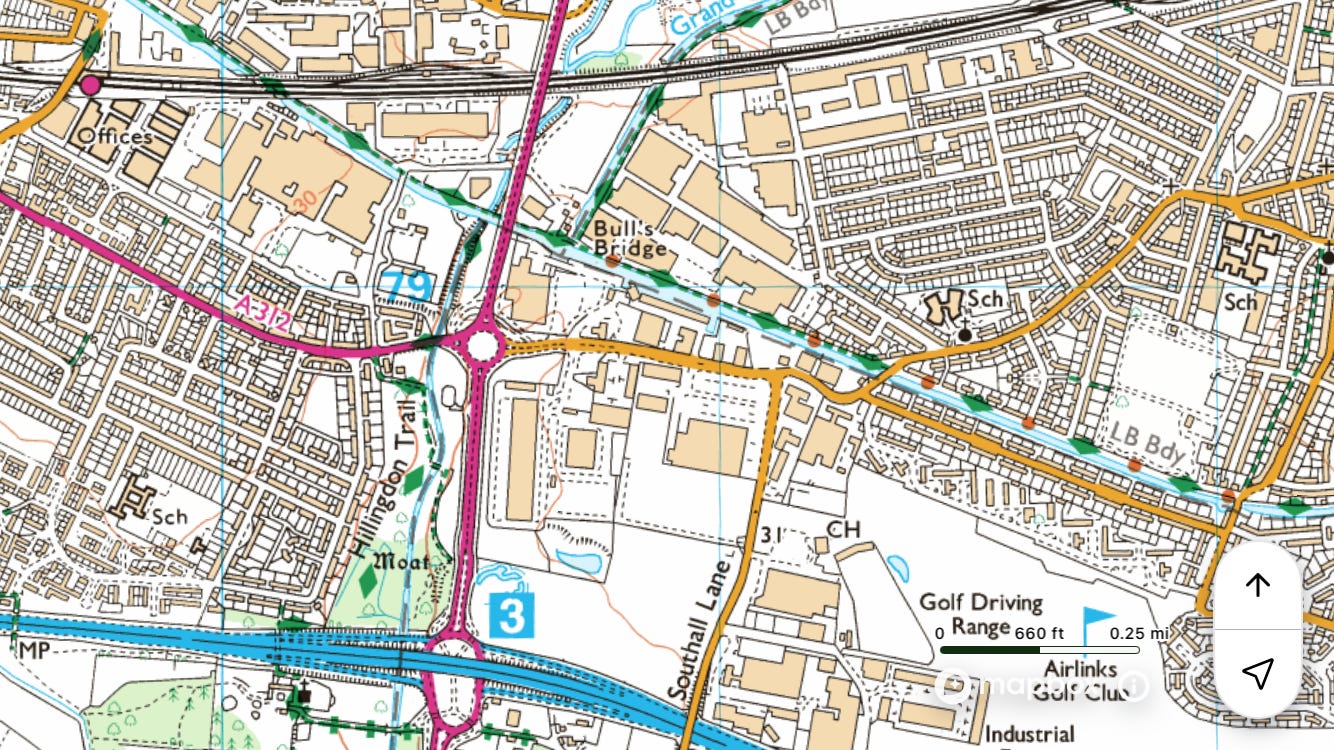
Elizabeth line to ◉Hayes and Harlington
Walk along the Grand Union Canal and join the Crane just west of the A312
Walk east on the Crane Valley Trail to the Thames / ◉Isleworth
Field notes: The river forms part of the border between the Boroughs of Hounslow to the east and Hillingdon to the west, Heathrow Airport being in the latter even though it is situated on what used to be Hounslow Heath, hence its name. Highlights of the walk include Cranford Countryside Park, Cranebank, and Crane Park. See Yeading Brook for the upper course of the river.


River Cray
~13 miles
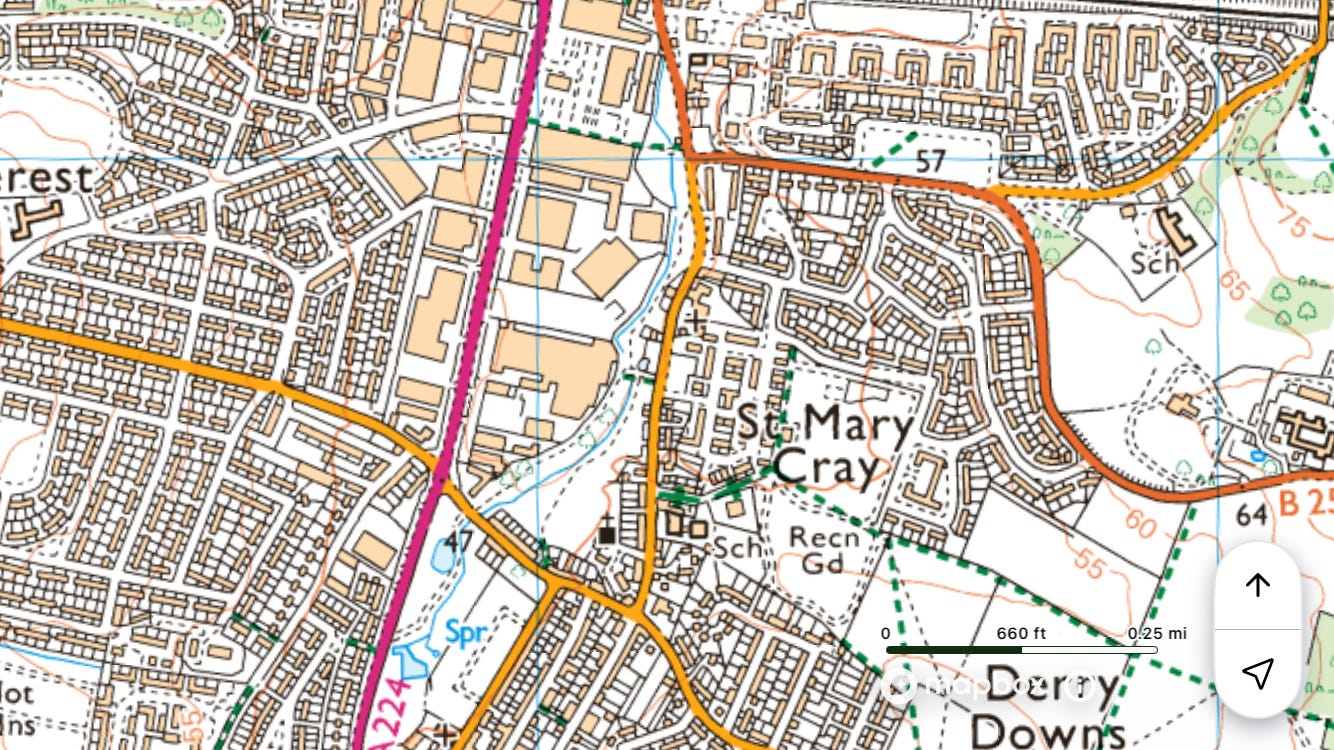
Train to ◉Orpington
Walk north on the Cray Riverway to the Darent / ◉Slade Green
Field notes: The Cray Riverway is signed from Foots Cray. Youths on motorbikes at Dartford Creek.


River Darent
Kent.
~19 miles
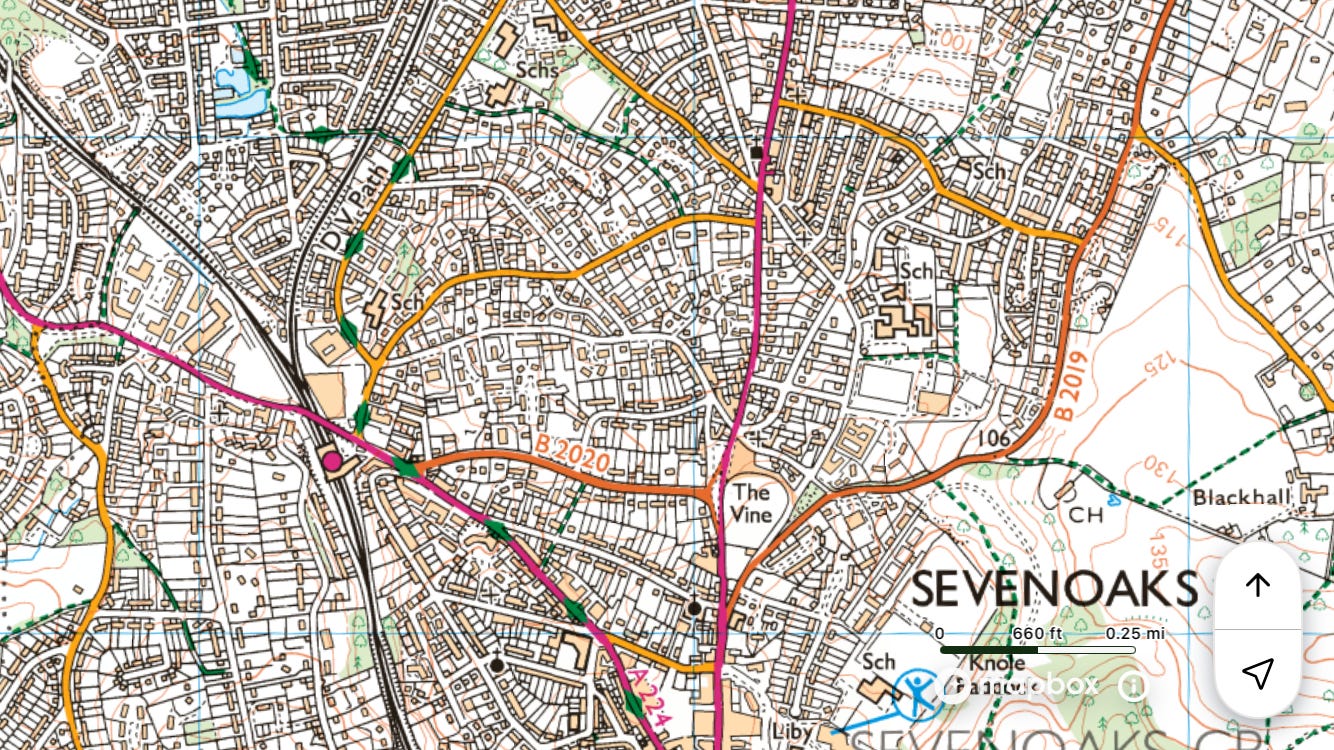
Train to ◉Sevenoaks
Walk north on the Darent Valley Path to the Thames / ◉Dartford
Field notes: It’s very well signed. The only bit that posed a problem was near junction 2 of the M25, where the OS has the route cross a footbridge obstructed by a locked gate, and does not mark the actual footbridge to use, which is two hundred yards to the north. So I ended up climbing into and out of a desolate bit of waste ground next to Darenth Road.


Dollis Brook
Incorporating part of Mutton Brook
Starts in Hertfordshire.
~13 miles
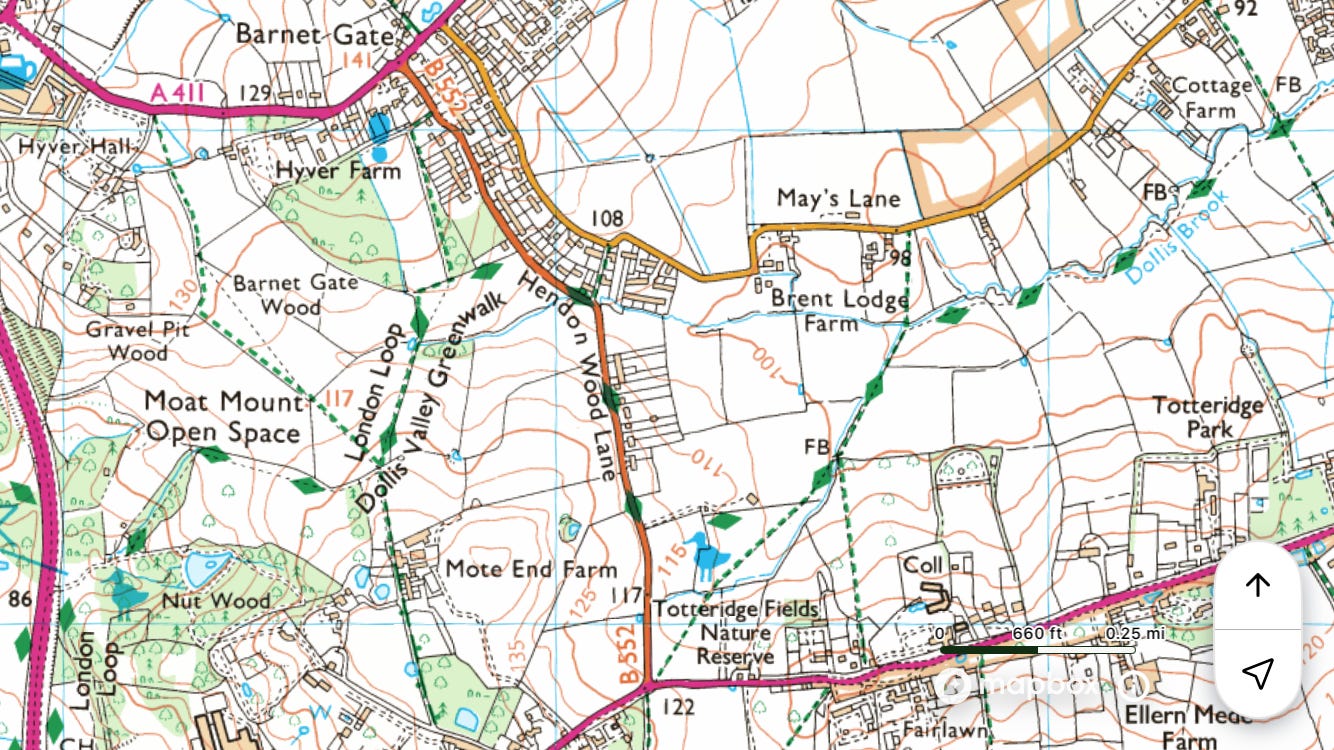
Thameslink to ◉Elstree and Borehamwood
Walk south to join the route at Moat Mount Open Space
Walk south on the Dollis Valley Greenwalk to the Brent / ◉Golders Green or ◉Hampstead Heath
Field notes: It took quite a long time to get from the station to the beginning of the walk (Furze Hill, Scratch Wood, and across the A1). But it’s a really good walk. I was aware of passing through Jewish areas, partly because of ‘FCK HMS’ stickers, which I had never seen before. Dollis Brook is the upper course of the Brent, as Yeading Brook is of the Crane.


Duke of Northumberland’s River
Upper section
See Longford River.
Lower section
~4 miles
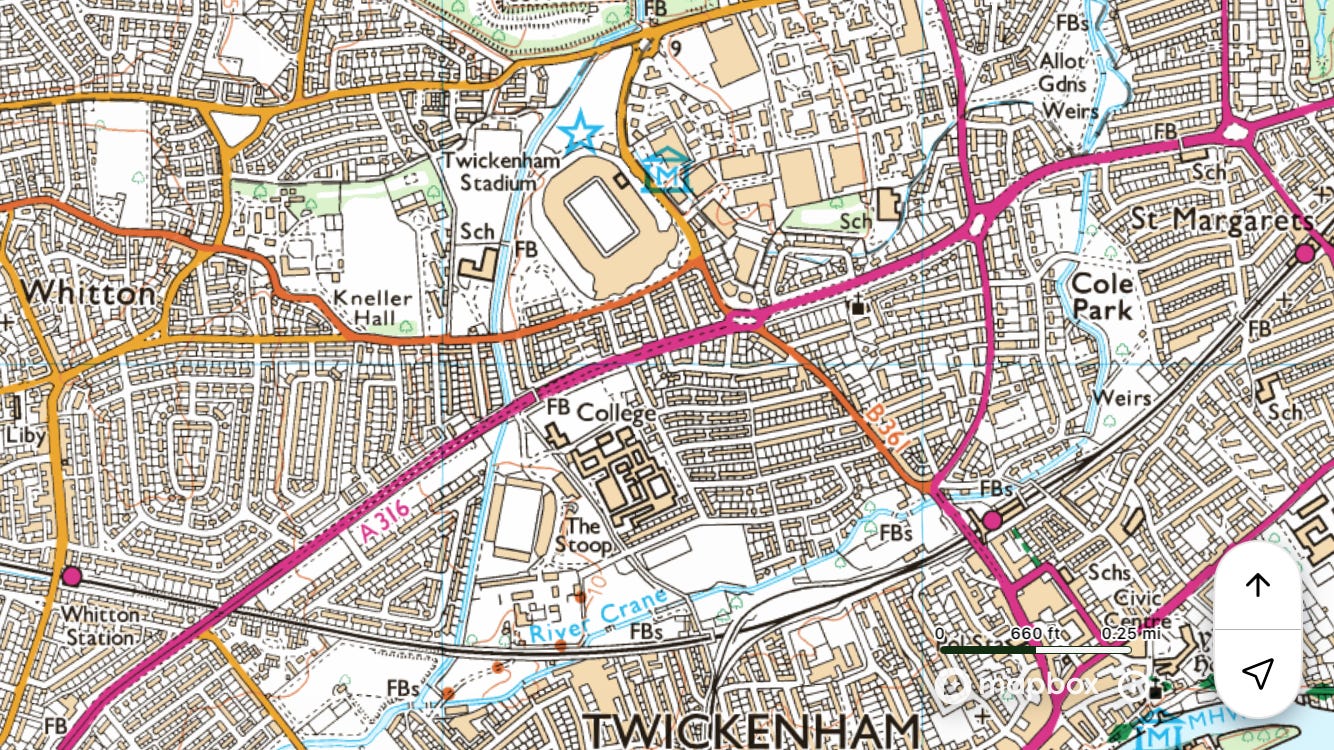
Train to ◉Whitton
Walk north-east on the Duke’s River Walk to the Thames / ◉Isleworth
Field notes: It wasn’t until I’d done most of these walks that I discovered this, pretty much the closest to where I live, the oldest man-made waterway in London, predating the more famous New River by over a hundred years. It is, in effect, a very long mill leat, built to take water from the Crane to the cornmill at Syon Abbey. This lower section was constructed in the late fifteenth or early sixteenth century, and now runs through Billy Williams’s Cabbage Patch (i.e. around Twickenham Stadium) and through Mogden sewage work (there’s a footpath), before making a right and flowing into the Thames. A sluice still feeds the lake in Syon Park.


Fray’s River
~8 miles
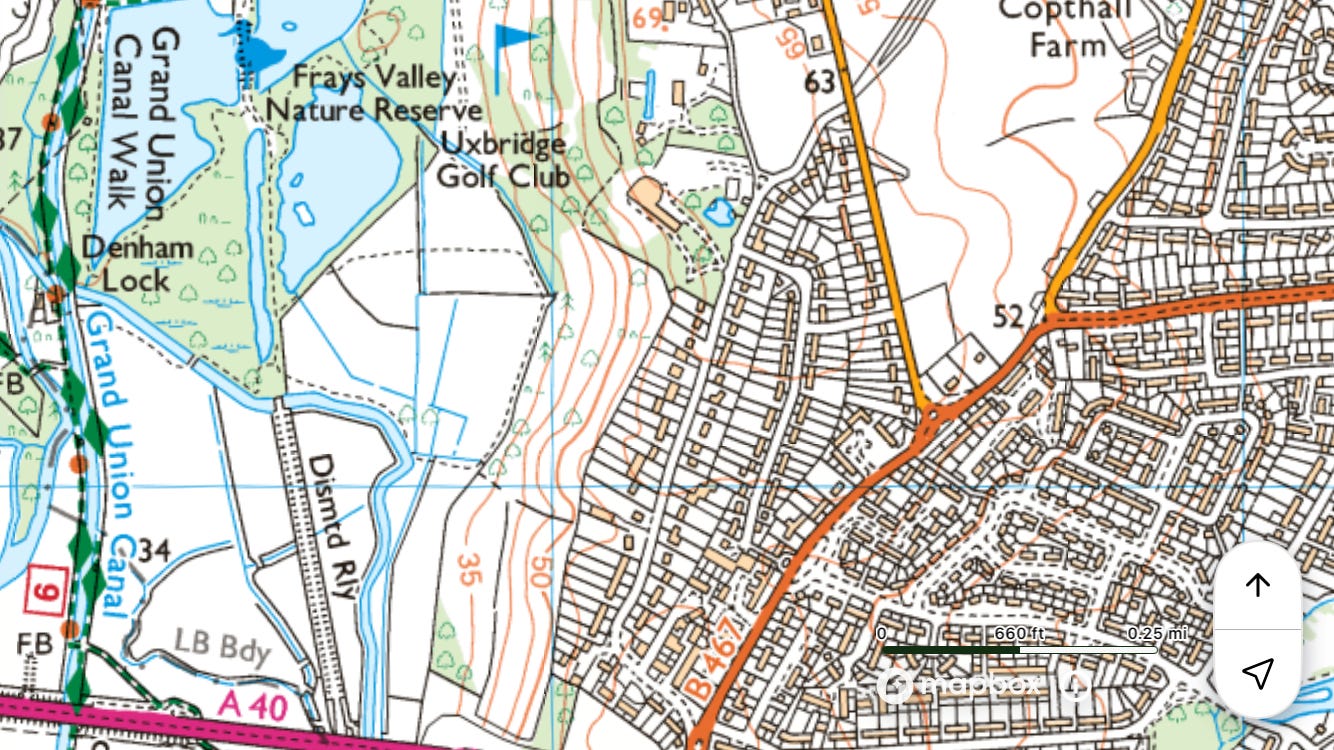
Tube to ◉Ickenham
Walk west to join Fray’s River at Denham Lock
Walk south to the Colne / ◉West Drayton
Field notes: A real find. The wetland area due west of Ickenham is wonderful: Denham Lock Wood / Fray’s Farm meadows / Fray’s Valley nature reserve. Saw muntjac, not that they’re wonderful. I’m intrigued by a mysterious and inviting island in Cowley, formed by the river splitting and coming back together. It doesn’t seem to have a name but was once the home of Cowley Mill, marked on Matthäus Seutter’s map of c. 1730. I’ll call it the River Isle of Cowley Mill. On the modern OS map it looks like a nature reserve – I suppose it is one, but there doesn’t seem to be any access for humans. When I tried to explore I found my way blocked by Monster House, the UK headquarters of Monster Energy. I saw an employee walking back to the office with his lunch. He only had a sandwich, no drink, so maybe they get unlimited complimentary Monster. It’s worth pressing on, south of the Slough arm of the GUC.


Grand Union Canal
Northern section (incorporating part of the upper Colne)
Partly in Hertfordshire and Buckinghamshire.
~12 miles
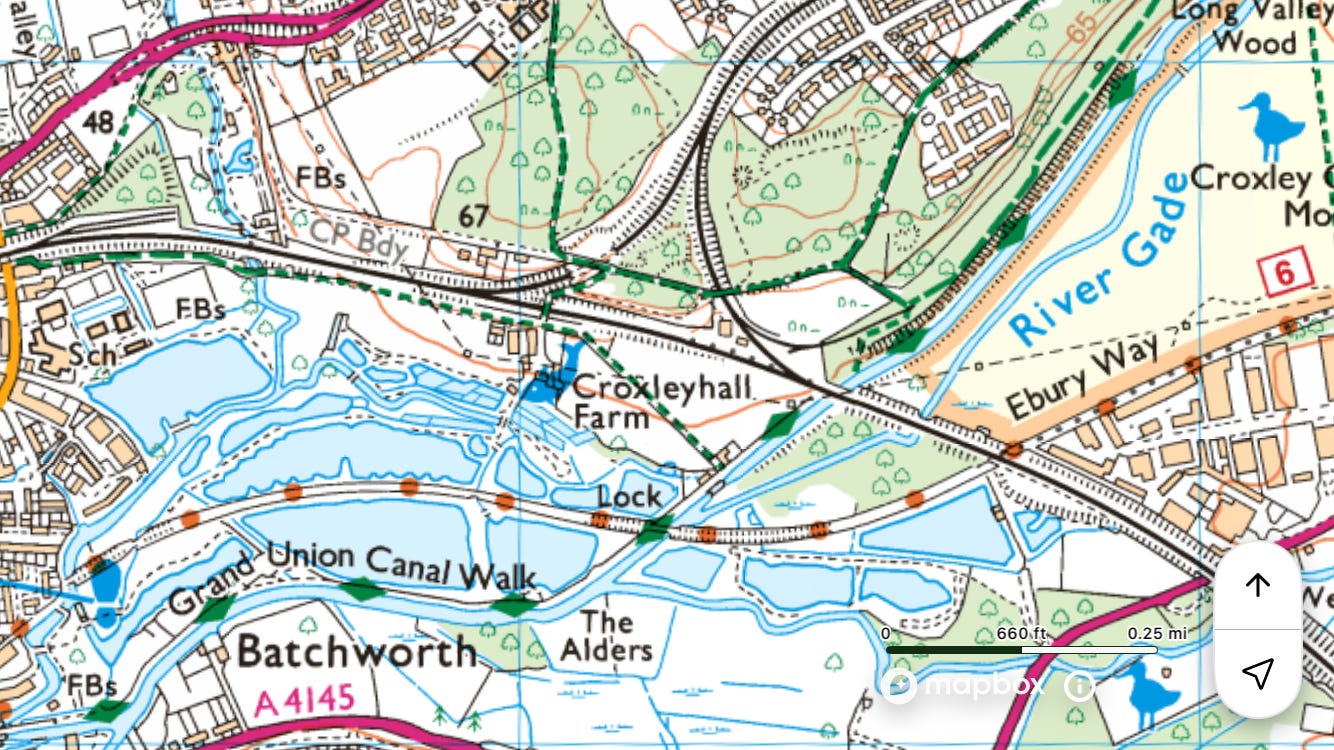
Overground to ◉Bushey
Walk west along the Ebury Way to join the canal
Walk south on the towpath to ◉Uxbridge
Field notes: The Colne Valley Trail is nearby and runs in the same direction most of the way, so often you can choose between the canal and another nearby path. Saw a badger near Maple Lodge nature reserve.


Southern section (incorporating part of the lower Brent)
~13 miles
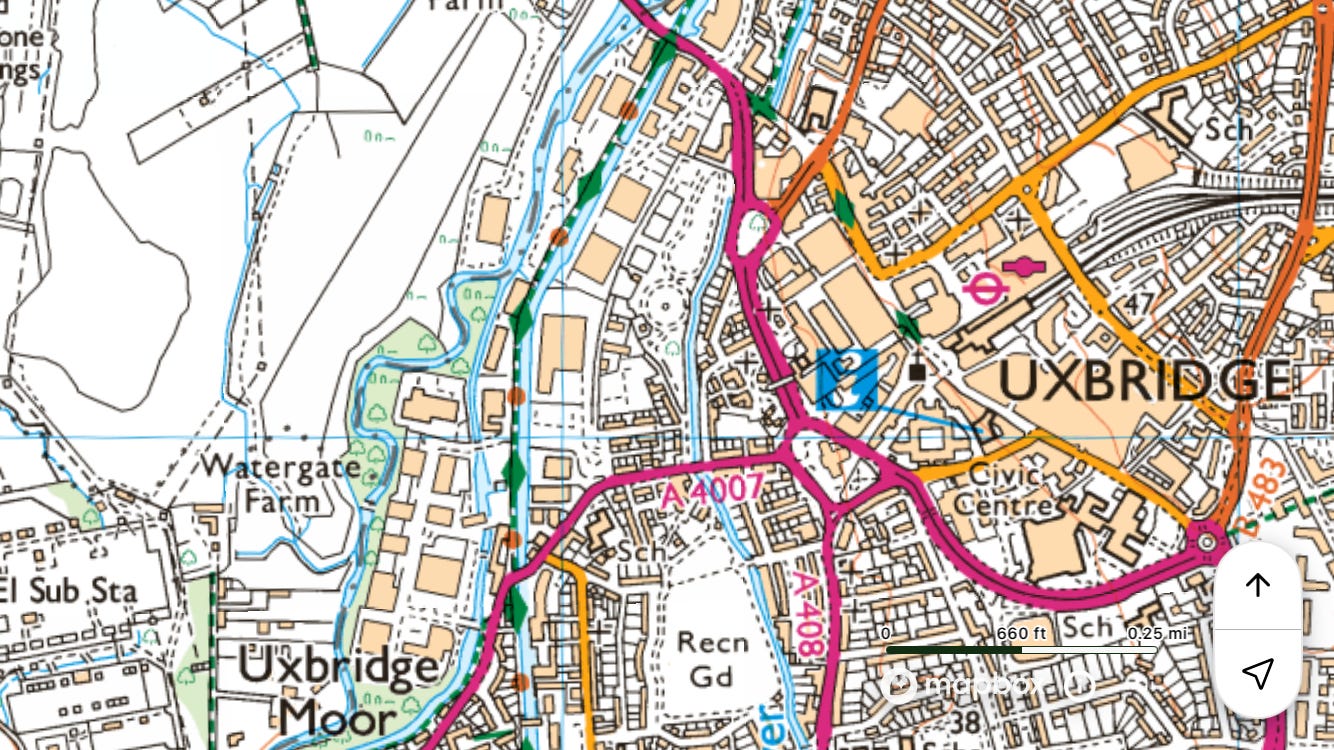
Tube to ◉Uxbridge
Walk south on the towpath to the Thames / ◉Brentford
Field notes: Didn’t find a bench to sit on and have my coffee and sandwich till Hanwell. Lots of litter and dog shit. This is more positive, from Ian Nairn: ‘The complete walk out of London from Paddington to Uxbridge, which I have never done, must be tremendous. Even a short sample is enough to get you hooked on the neglected world of industrial landscape. After it, everything else seems a bit pallid.’3 I prefer walking towards the Thames, but this page is a testament to getting hooked on a neglected world.
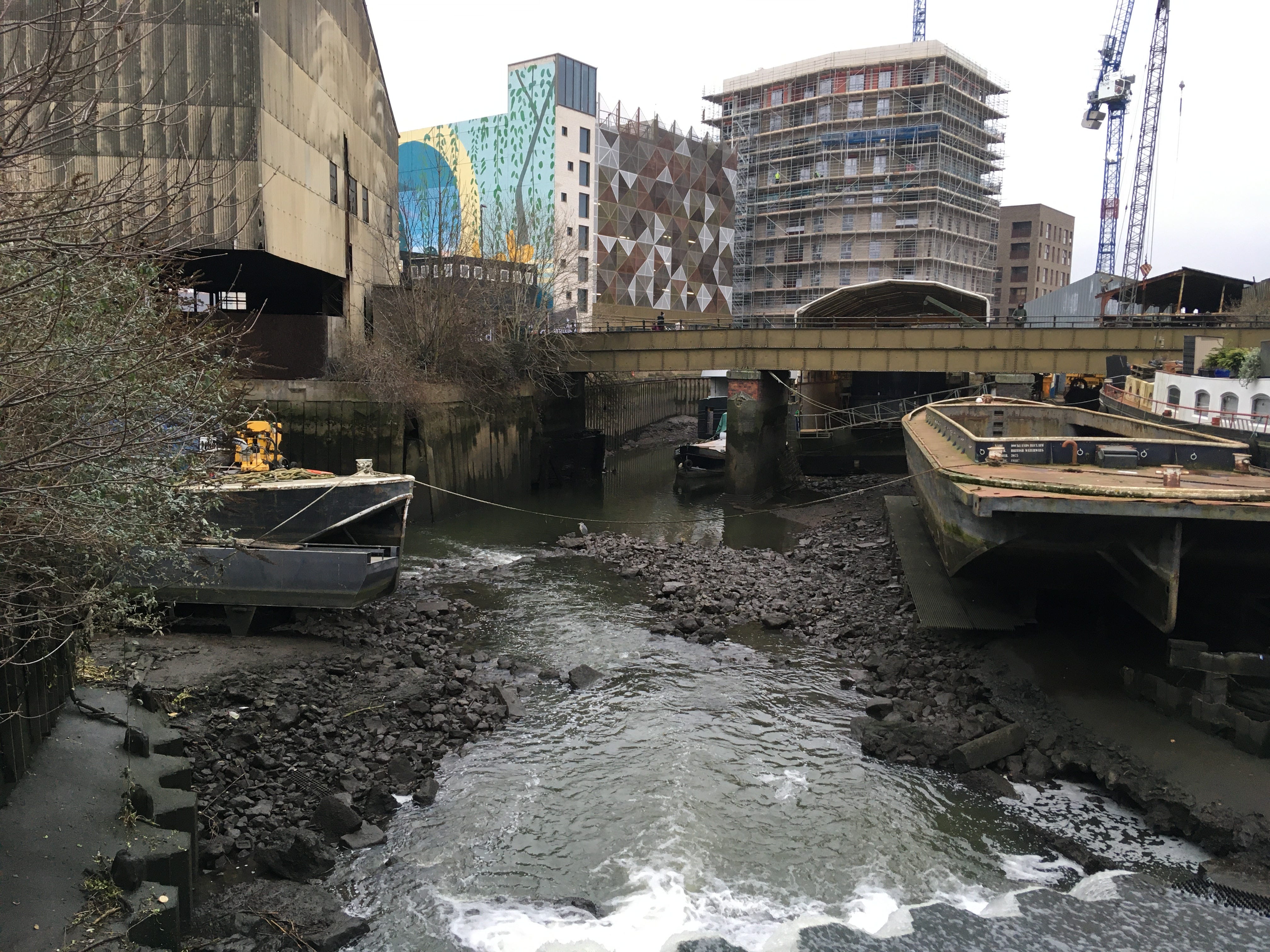
Slough arm
Partly in Buckinghamshire.
~13 miles
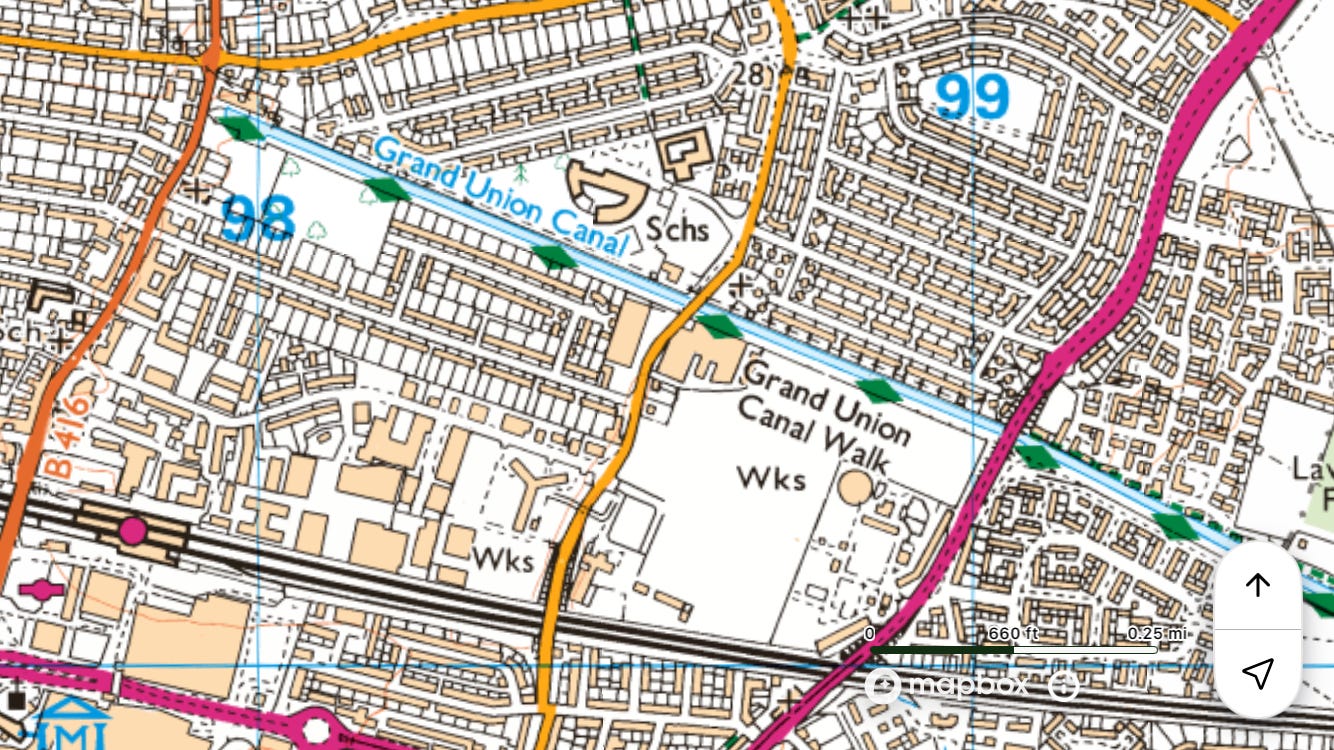
Elizabeth line to ◉Slough
Walk on the towpath to Packet Boat Marina, then along the main line of the canal east to ◉Hanwell
Field notes: Passing over Colne Brook and then Fray’s River is nothing short of thrilling.


Paddington arm
~14 miles
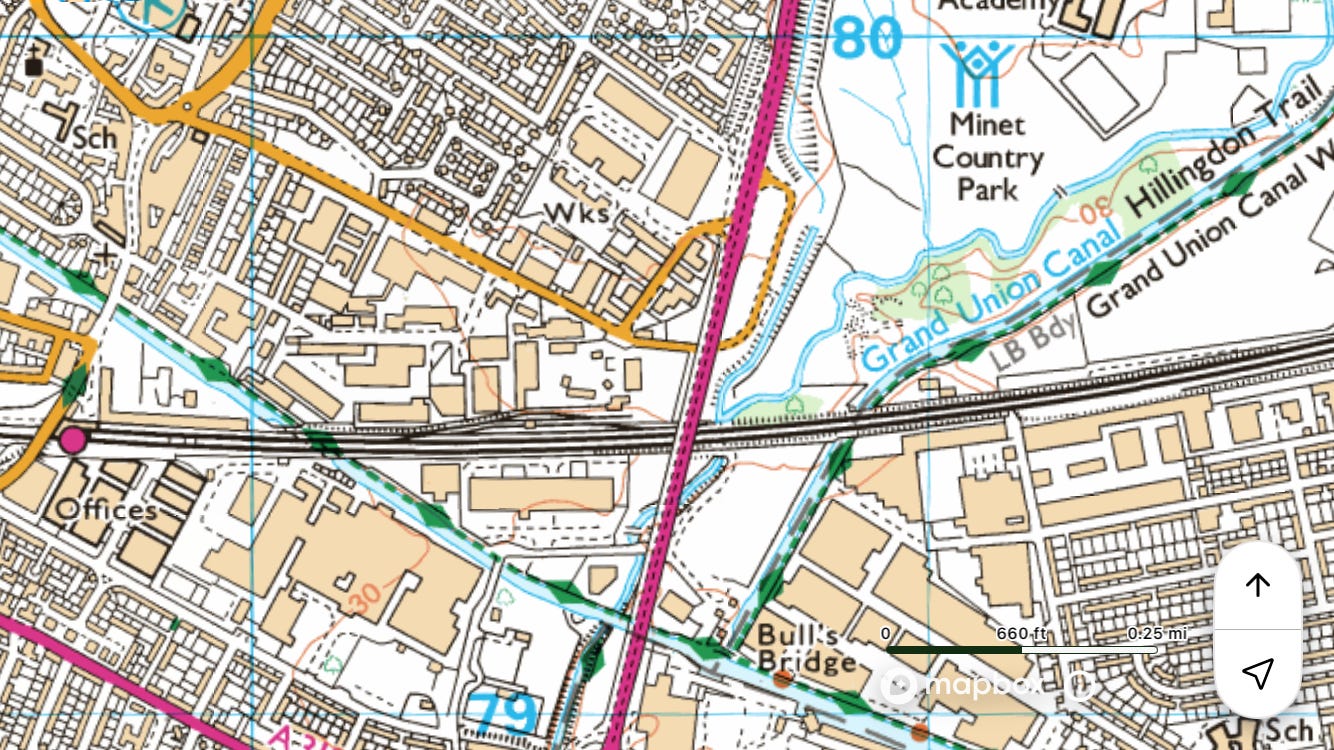
Elizabeth line to ◉Hayes and Harlington
Join the Paddington arm at Bull’s Bridge
Walk east on the towpath to Little Venice / ◉Paddington
Field notes: Lots of berks on Lime bikes, litter, and polluted air from boats’ wood burners – poor England. Describing Venice, Byron once implied that by contrast the Paddington Canal, though it contained ‘calm water’, was ‘nothing but a clay-coloured ditch’. I did see a kingfisher, though – saw it fly back and forth for a couple of minutes. A highlight is walking by Kensal Green Cemetery, which Ian Nairn calls ‘a friendly piece of melancholy, dust to dust in the gentlest sense, with ragwort and cow parsley covering up all those nineteenth-century bones.’4
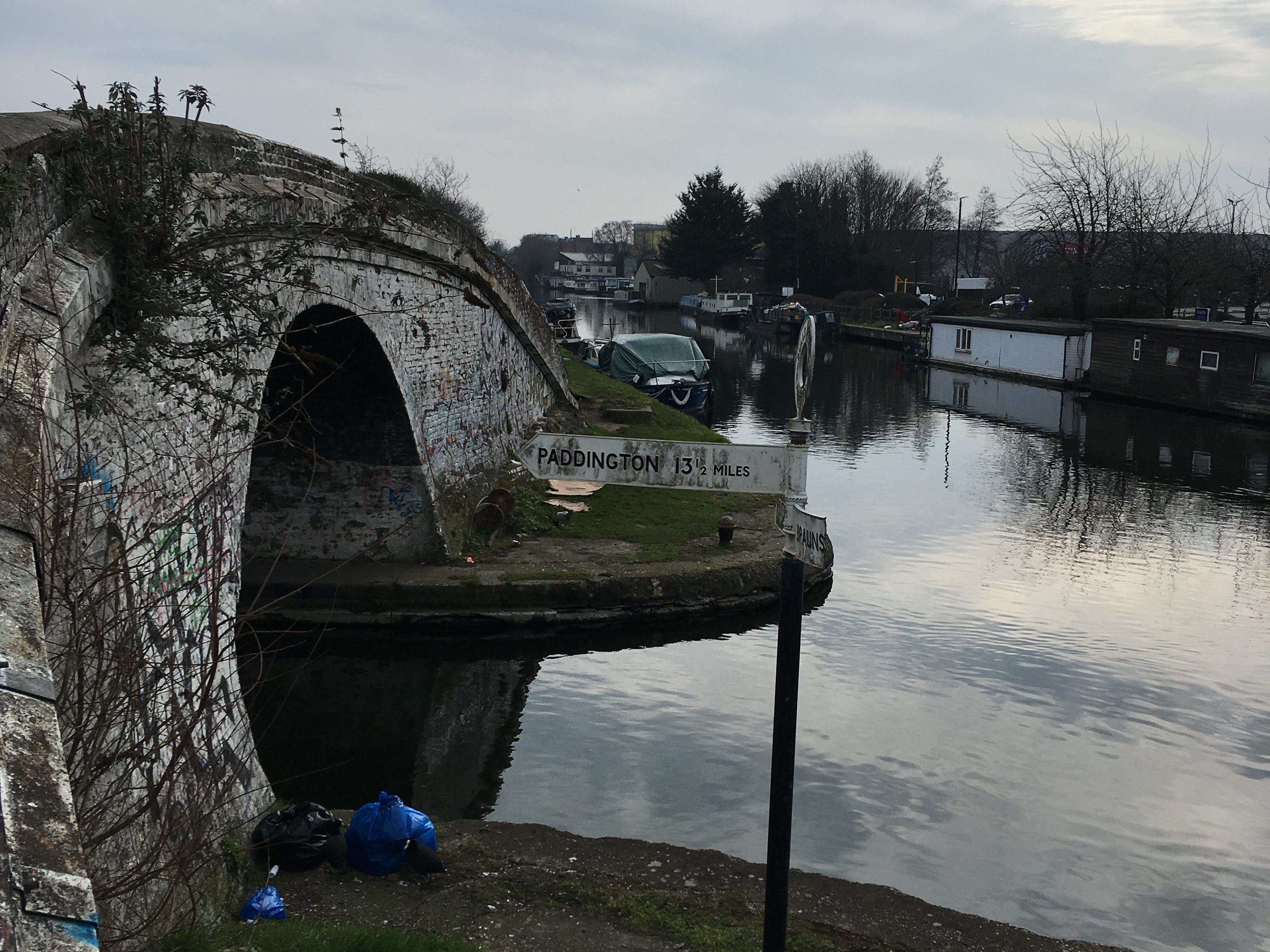
River Hogsmill
Partly in Surrey.
~8 miles
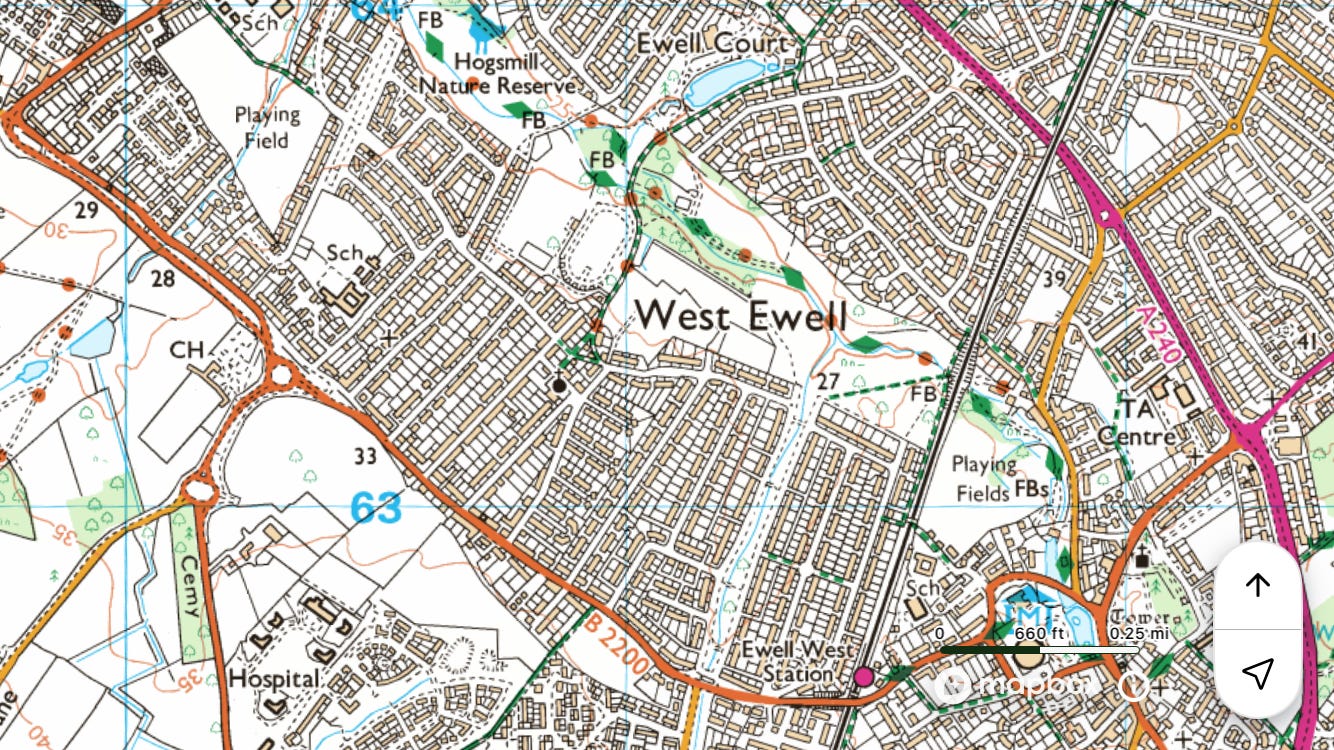
Train to ◉Ewell West
Walk north to the Thames / ◉Kingston
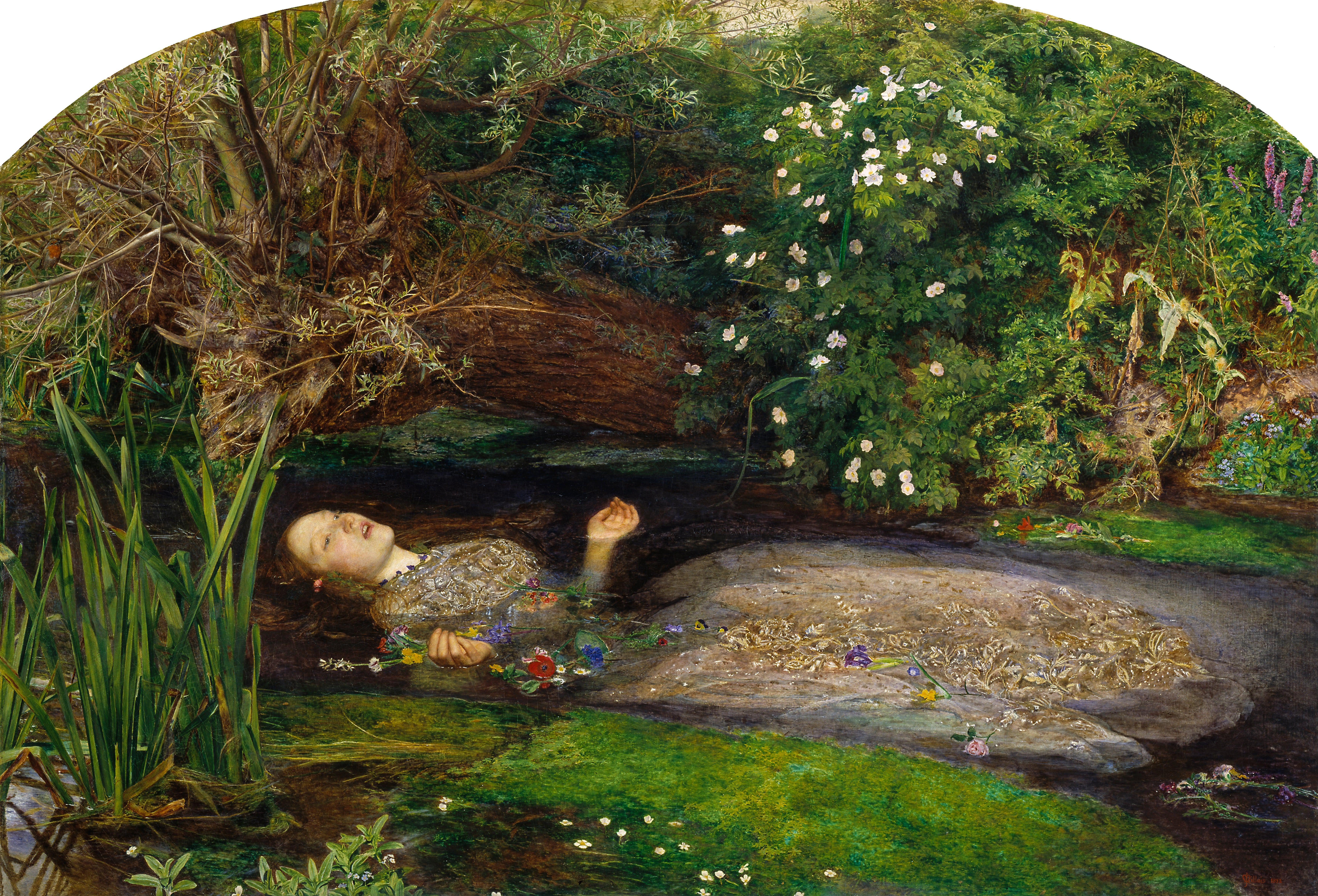
Field notes: Lots of it isn’t very nice, stretches of the path blocked, nettles, etc. Brewer’s Dictionary of London Phrase and Fable calls Worcester Park ‘One of the few districts that blithely straddle the London border as though it were not there […] In 1851 the Pre-Raphaelite artists Sir John Millais and William Holman Hunt spent the summer at Worcester Park Farm. […] Millais probably painted the landscape background for his celebrated work Ophelia (1852) […] from a meadow beside the Hogsmill River, although the precise spot is still the subject of debate.’5
River Ingrebourne
~9 miles
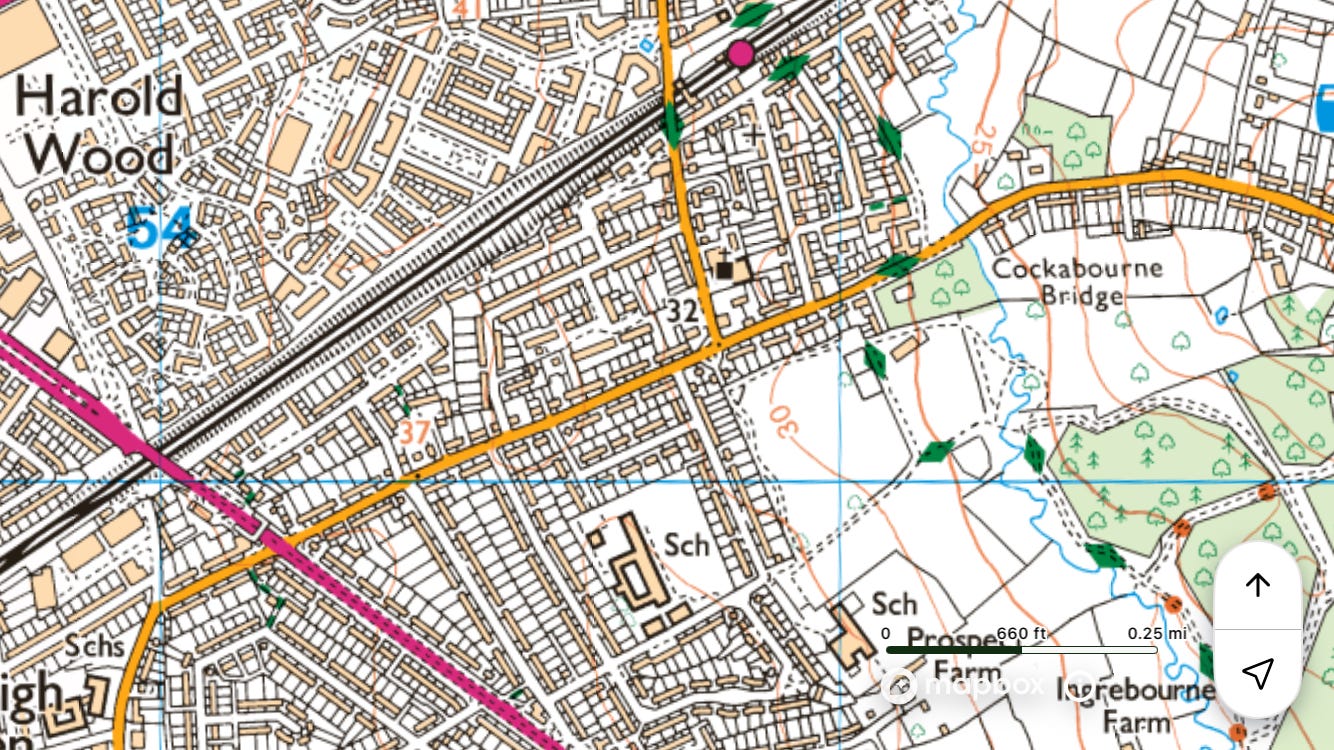
Elizabeth line to ◉Harold Wood
Walk south to ◉Rainham
Field notes: Highlights include open fields north of Upminster and the Ingrebourne Valley nature reserve north of Rainham.


